HERITAGE
Historical Patterns: The Legacy of European Hardwood
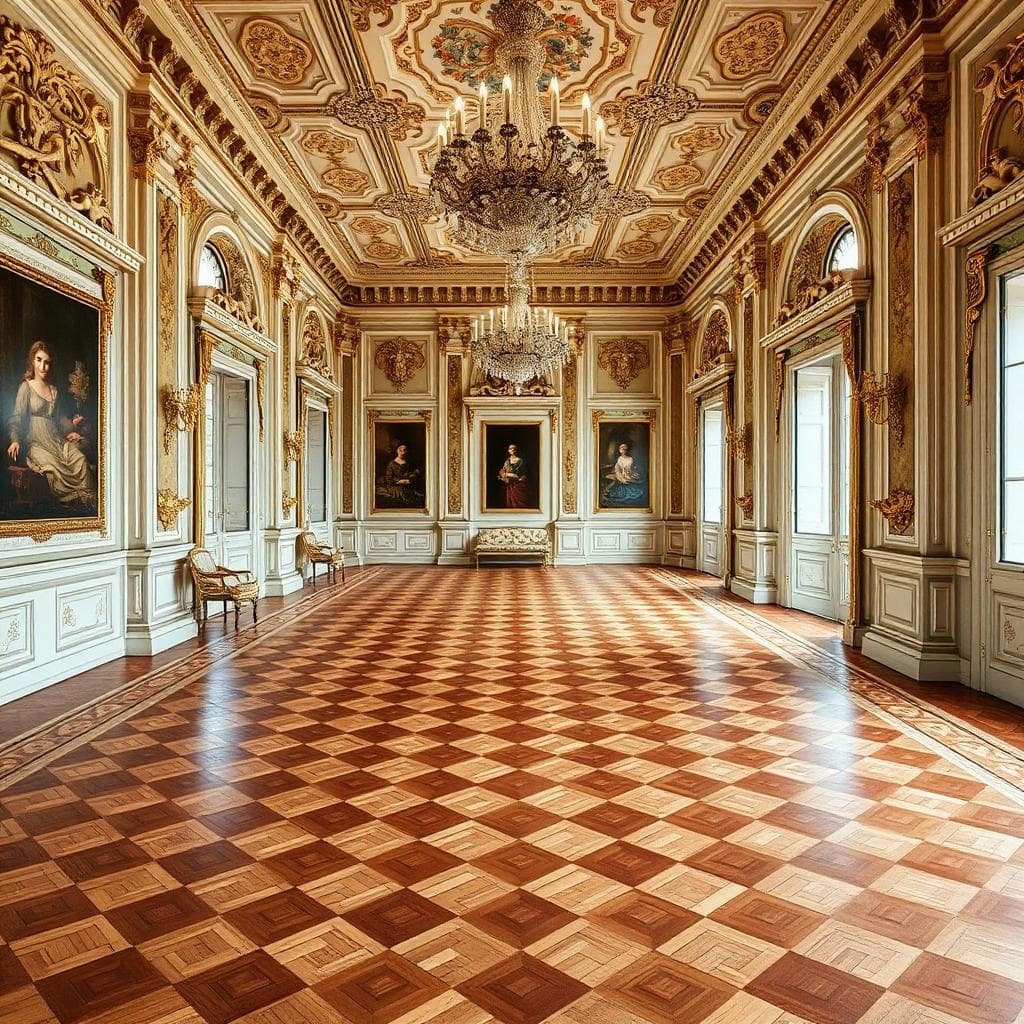
European hardwood patterns carry centuries of tradition, craftsmanship, and artistic vision. These time-honored designs continue to inspire modern interiors, connecting contemporary spaces to a rich architectural heritage.
The Origins of Parquet
Parquet flooring originated in 16th century France, initially developed as an alternative to marble in royal palaces. The word "parquet" comes from the French term for a small enclosed space. Early parquet floors were true works of art, featuring intricate geometric patterns assembled by master craftsmen.
Versailles Pattern: Royal Elegance
Named after the Palace of Versailles where it was first installed, this pattern features large square panels with a central diamond motif. The Versailles pattern represents the pinnacle of French baroque design and remains a symbol of luxury and sophistication in high-end interiors.
Herringbone Through the Ages
The herringbone pattern has ancient roots, originally used in road paving by the Romans for its superior load distribution. By the medieval period, it had transitioned to interior flooring, becoming a staple in European manor houses and eventually spreading worldwide.
Chevron's Continental Appeal
Chevron, distinguished from herringbone by its point-to-point alignment, gained prominence in 17th century French châteaux. The continuous zigzag creates a sense of movement and drama, making it a favorite for grand hallways and reception rooms.
Modern Interpretations
Today's engineered hardwood technology makes these historical patterns more accessible and practical than ever. While honoring traditional aesthetics, modern manufacturing ensures superior stability and easier installation, bringing European elegance to homes worldwide.